Scaling Grandma's Cake for Twelve (and a Bigger Tin)
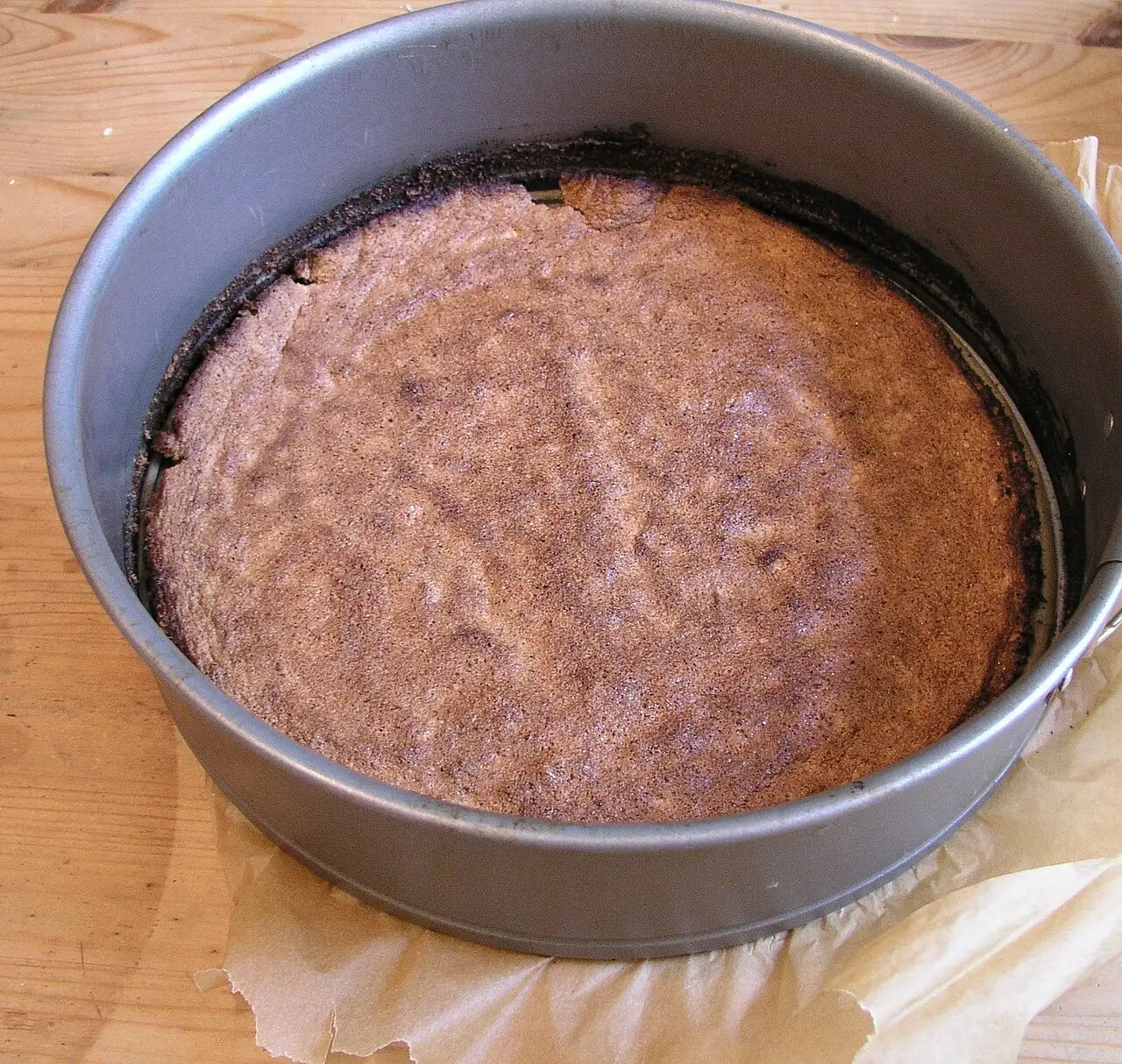
The recipe card was in his grandma’s handwriting, slightly translucent with butter at one corner. “Serves 8. 20cm round tin. 180°C.” Leo had promised to bring it to his sister’s engagement lunch.
There were going to be twelve people. And Leo, it turned out, owned exactly one cake tin: a 23cm springform he’d bought for a cheesecake two years ago.
His first instinct was to do what the card implied — make one-and-a-half times the recipe. His second instinct, thankfully, was to check whether that would even fit in the tin.
Scaling by people versus scaling by tin
There are two different questions hiding here, and they give different answers.
Scaling by servings asks: how much more cake do I need? Going from 8 servings to 12 is a factor of 1.5. The recipe scaler turns the recipe’s 225g of butter into 337.5g, and every other ingredient by the same 1.5.
Scaling by tin asks: how much batter fills this tin to the same depth as the original? That depends on area, not diameter. The cake tin size converter gives:
| Tin | Baking area |
|---|---|
| 20cm round (the recipe’s tin) | 314cm² |
| 23cm round (Leo’s tin) | 415cm² |
415 ÷ 314 is about 1.32. So to keep the cake the same depth — and the same baking time — Leo needed to multiply the recipe by 1.32, not 1.5. That takes the butter to about 297g.
If he’d scaled by 1.5 and poured it all into the 23cm tin, the cake would have been noticeably deeper than the original. Deeper cakes need longer in the oven, and the edges can dry out while the middle catches up. It’s one of the most common reasons a well-loved recipe “doesn’t work” in a new kitchen.
So is 1.32 enough for twelve?
Here’s the nice surprise: a 23cm cake at the original depth has 32% more cake than the 20cm one. Eight generous slices became about ten and a half — and twelve slightly slimmer ones is perfectly respectable for a lunch with other food. Leo went with 1.32.
(If he’d truly needed 50% more, the honest answer would have been a second, smaller cake rather than an overfilled tin.)
The American cousin’s version
Halfway through, Leo’s aunt texted a photo of her copy of the recipe from Boston, where everything had been converted to cups. “1½ cups flour, 1 cup sugar”. Grandma’s card said 175g flour and 200g sugar. To check the two versions matched, he ran the cups through the cups to grams converter:
- 1½ US cups of flour → about 180g (card: 175g)
- 1 US cup of sugar → about 200g (card: 200g)
Close enough to the original, with one caveat the converter spells out: flour weight per cup depends heavily on how you fill the cup. Spooned and levelled is about 120g a cup; scooped straight from the bag can be noticeably more. For baking, weighing wins every time.
The oven, and the fan
The card said 180°C. Grandma’s oven was a conventional one; Leo’s is fan-assisted. The oven temperature converter shows the usual fan equivalent alongside the Fahrenheit figure:
- 180°C conventional → 356°F (American recipes call this 350°F) → about 160°C in a fan oven
The 20°C reduction is a rule of thumb rather than a law — Leo’s oven manual suggested the same, but it’s worth checking yours.
How it turned out
The cake came out level, golden, and very slightly underdone in the middle at the original time; another four minutes fixed it. Leo now writes “23cm: ×1.32, 160 fan, +4 min” in pencil on the corner of the card, next to the butter mark.
A quick checklist for any recipe
- Decide whether you’re scaling for people or for a tin — they’re different numbers.
- If the tin changes, scale by area and keep the depth the same.
- Weigh rather than measure by cup once you’ve scaled.
- Adjust for a fan oven, then check for doneness a few minutes early.
All of the conversions above are in the Cook tools, including tablespoons, ounces and millilitres.